Sound familiar?Vineland
- The call
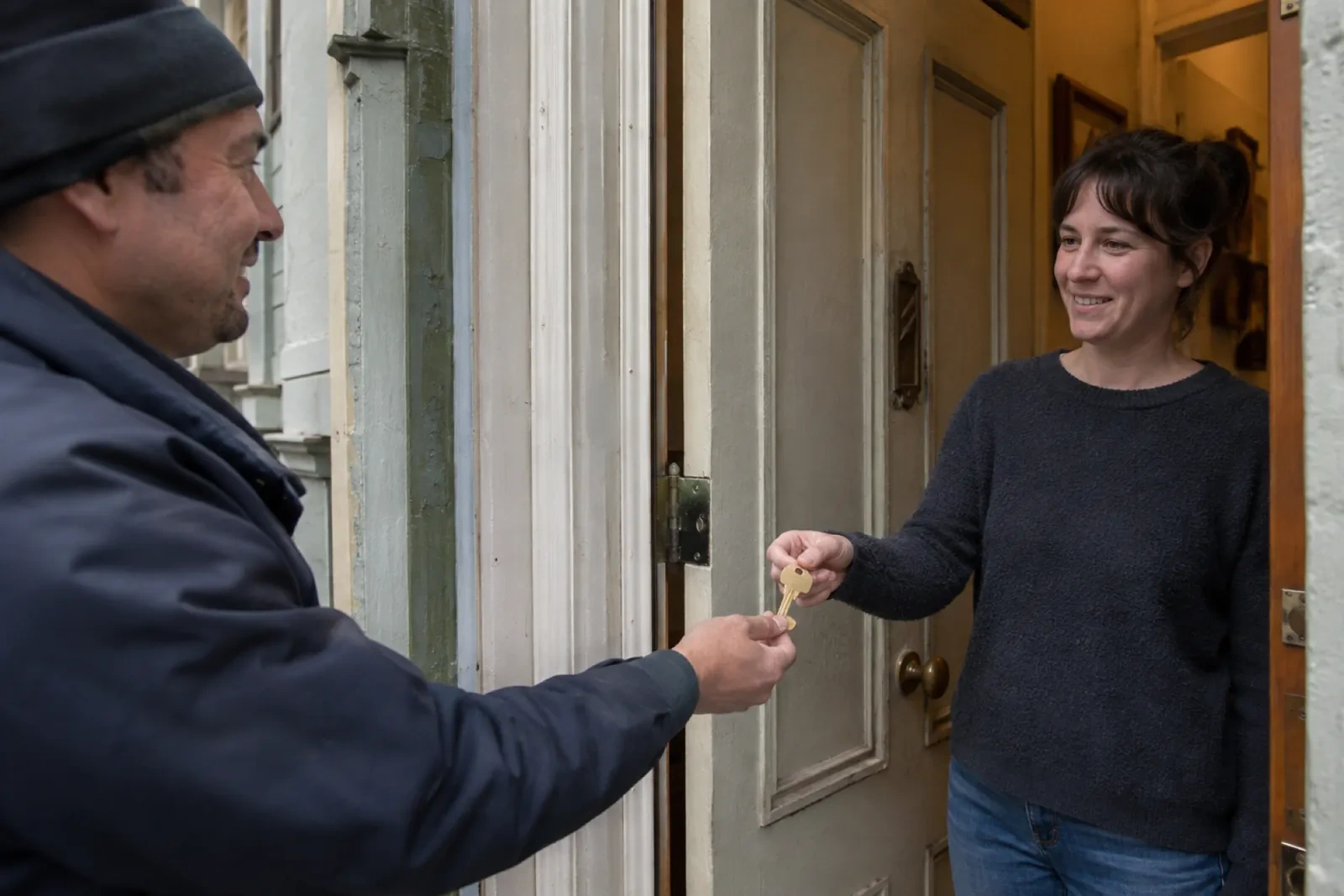
- The key turns a full circle without any resistance and the deadbolt stays exactly where it is. There is no click, nothing moves behind the face of the lock, and the door is as closed as it was before you touched it.
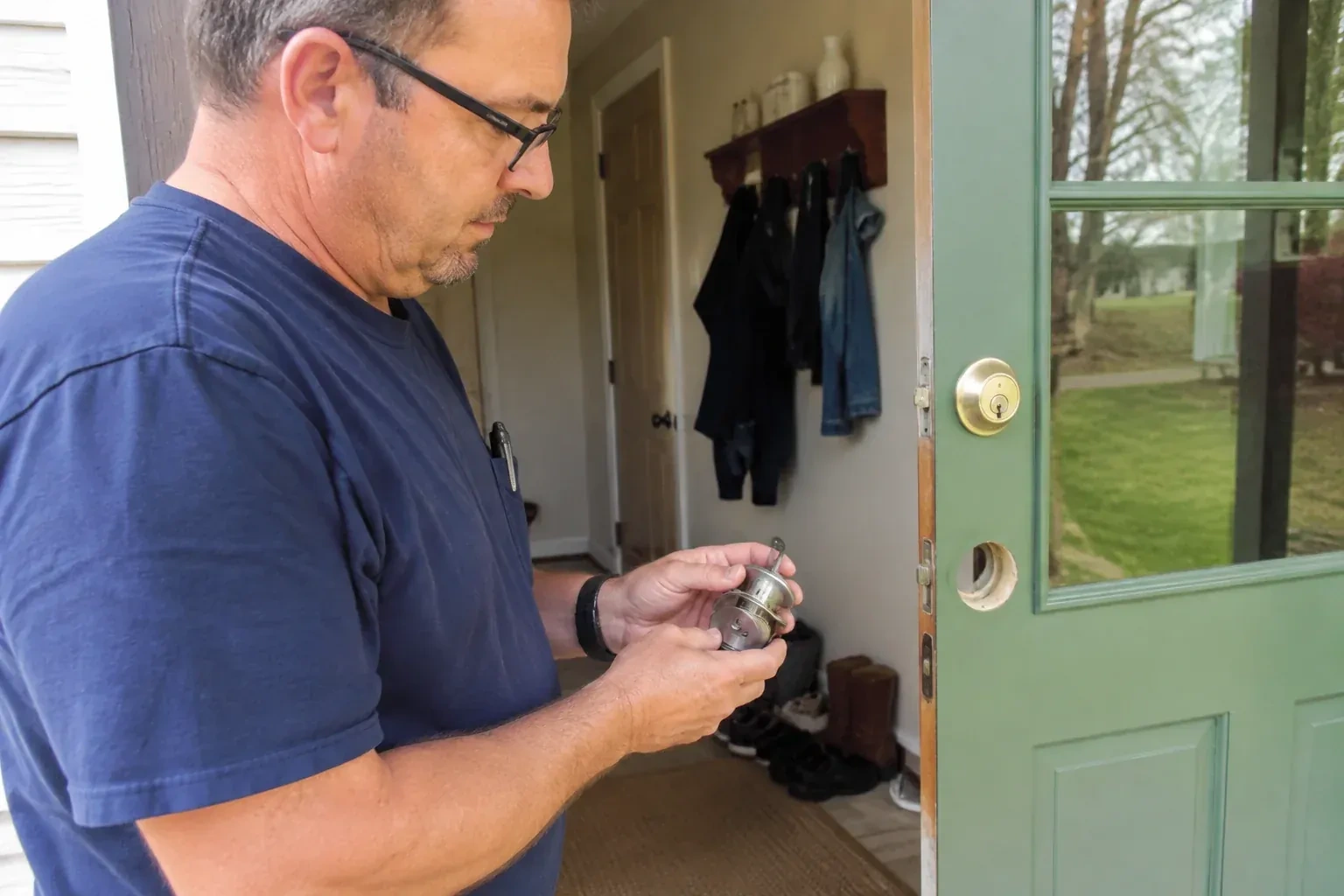
You are inside, the deadbolt is thrown, and the thumb-turn will not budge. It moved a little last week with some effort.
Many jammed locks are not lock problems at all. Wood doors swell in humid weather and shrink in dry winter air, hinges loosen and let the door drop, and a strike plate that was fine in spring is a few millimetres out by autumn. When that happens the bolt is squeezed in its pocket and the key cannot move it. The locksmith checks this first by loading the door in different directions while working the key, and by comparing how the lock behaves with the door open. If the door is the cause, the opening is gentle and the lasting fix is a hinge, strike or seal adjustment.
Sound familiar?Vineland
Seized & Jammed Lock Opening · Vineland
Scene 1
Every jammed lock falls into one of three groups, and sorting it is the whole diagnosis. A key that enters fully and will not turn points to the cylinder: grit, ice, corrosion, dried lubricant or a plug that has not returned to its neutral position with the shell. A key that turns freely and moves nothing points to the connection behind the cylinder, the tailpiece or cam, or to a broken hub in a mortise case. A key that works only when the door is pushed, pulled or lifted points past the lock entirely to the door and its strike. Each group has its own opening method and its own repair.
Scene 2
A plug that will not turn is coaxed, not wrenched. The locksmith flushes the keyway with an electronic contact cleaner to lift out grit and old residue, then applies a penetrating lubricant sparingly, since too much simply carries dirt deeper. The key is worked in small movements, in and out and a few degrees each way, letting the pins settle back into their stacks. If the cylinder cap has loosened, it is snugged so the plug sits square. As the plug begins to move, tension is kept light so nothing inside is bent. Once the door is open, the cylinder is removed for proper cleaning rather than left with lubricant masking the wear.
Scene 3
A serviced cylinder stays that way with very little effort. At the interval and with the product that cylinder's maker specifies, a short burst of lock lubricant into the keyway followed by a few turns of the key is enough; stay with that one product, since mixing lubricants makes a paste. Household oils, penetrating sprays and silicone meant for hinges belong nowhere near the pins, because they thicken and attract grit. Wipe the key before it goes in on a muddy or salty day. If the lock ever starts to drag, a puff of lubricant is the first response, and a call is the second.
What shapes the quoteBeamsville Locksmith Pros
FeesSame any hour
Locks rarely fail in a day; they fail slowly over months and announce it in a morning. Grit and old lubricant build up in the pin stacks until one cold night thickens them past the point the key can overcome, or a door that has been drifting on its hinges finally pins the bolt after a humid week. The wiggle you needed last month was the warning. A lock in this state is usually cleaned or adjusted back to health rather than replaced.
Usually not. Most jammed locks are saved by cleaning the cylinder, fitting a small part such as a tailpiece or spring, or adjusting the door so the bolt has room. A new cylinder is fitted when the plug or shell is corroded through or twisted by forcing, matched to your finish and, where possible, pinned to your current key. A complete new lockset is usually a choice you make rather than a requirement, though some internal failures cannot be serviced in place and call for a full replacement.
The face of a building that never sees direct sun stays colder and damper, so ice in a keyway lasts days longer there and condensation sits in the cylinder rather than drying off. Wind-driven rain and snow tend to hit the same face. Those doors deserve a keyhole cover, a storm door where one fits, and a lubricant check before the season turns, and they are often the first lock a locksmith asks about.
NiagaraOntario
Seized & Jammed Lock Opening · Lincoln, Beamsville, Campden, Wellandport
Every square is one home in a hundred.
On-site assessment
You are inside, the deadbolt is thrown, and the thumb-turn will not budge.
(289) 432-1169, open 24/7.
On-site assessment preferred · (289) 432-1169, open 24/7