Sound familiar?Lincoln
- The call
- The fire inspector's note is blunt: the banquet hall's second exit still turns on a deadbolt, and the crowd it is rated to hold needs a door that opens under one motion, no key involved.
A padlock went on the stockroom's back door years ago for security and nobody has thought about it since, until the walkthrough this week pointed out that the same door is the room's only other way out.
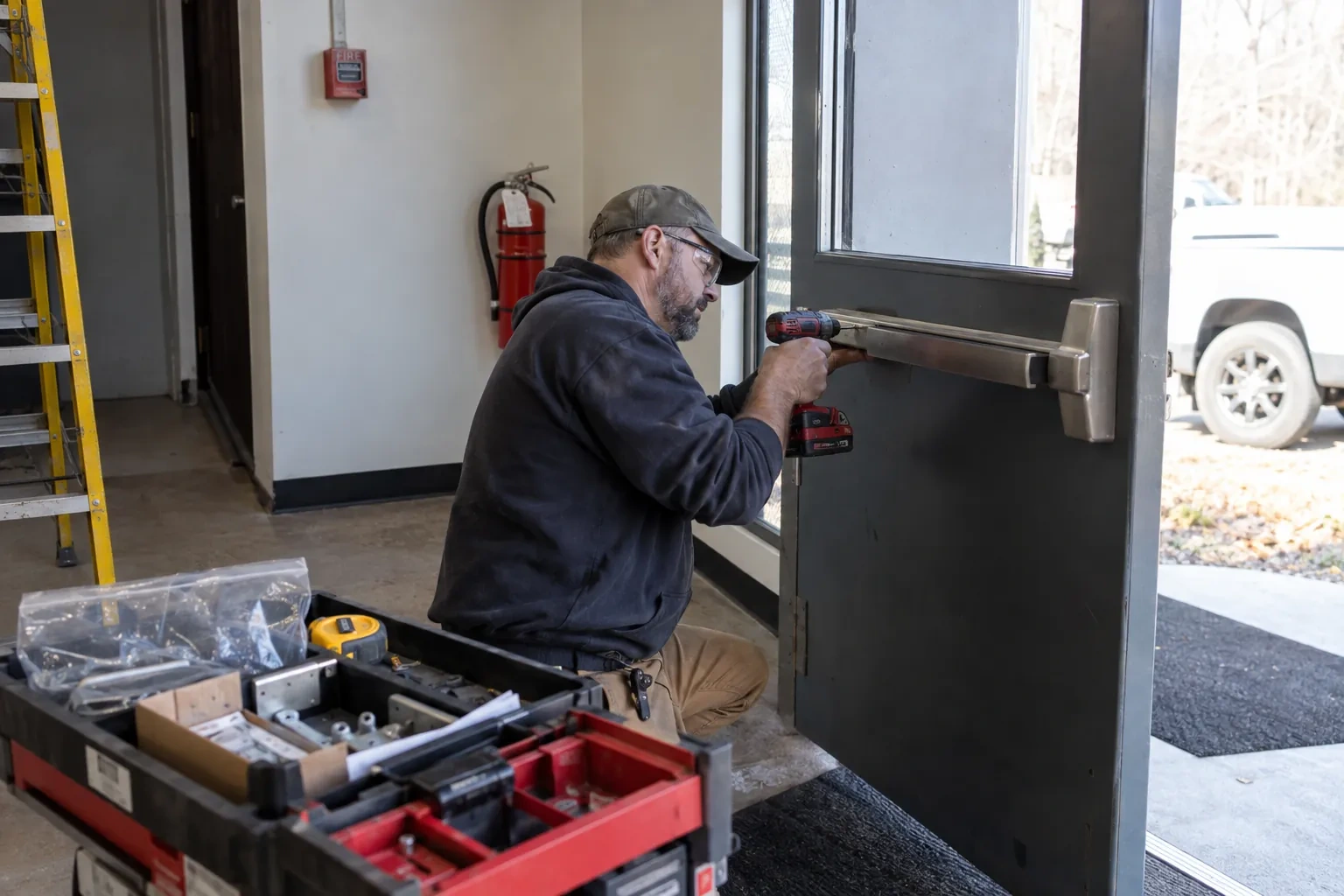
A tenant fit-out is a common point to bring exit hardware into a space for the first time. As walls move and a room's intended use becomes clear, the doors serving it get measured against that use: occupancy, fire rating, width and whether the space now qualifies as an assembly occupancy. Specifying and fitting the hardware alongside the rest of the fit-out, rather than after an inspector flags it, keeps the schedule intact and gives the space a documented exit from the day it opens.
Sound familiar?Lincoln
Panic & Exit Hardware · Lincoln
Scene 1
The assessment records the occupancy type and calculated occupant load for the room the door serves, whether the door sits in a fire separation, and who the authority having jurisdiction is likely to be, whether that is a fire inspector, a building official or an insurer. These facts, not the door's appearance or its width alone, are what decide whether a releasing device is required, whether it must also be fire-rated exit hardware, and what documentation the finished installation should carry.
Scene 2
The inside of the door stays simple: push to leave, every time. The outside gets whatever lets the right people in, a plain pull for a door nobody needs to unlock from outside, a lever with a key cylinder for staff entry, or a keyed cylinder alone where entry is occasional. Whichever trim is chosen, it operates entirely independently of the inside crossbar, so locking the outside never has any effect on a person's ability to leave from within.
Scene 3
The building now has a document naming every device fitted, its rating, the trim and any electrified function, and the tests each assembly passed on installation day. That record is what a fire inspector, an insurance reviewer or a new facilities manager will ask for, and having it ready saves reconstructing the history of a door from memory or from whatever sticker happens to still be on the case. It is worth keeping with the building's other life-safety paperwork.
What shapes the quoteBeamsville Locksmith Pros
FeesSame any hour
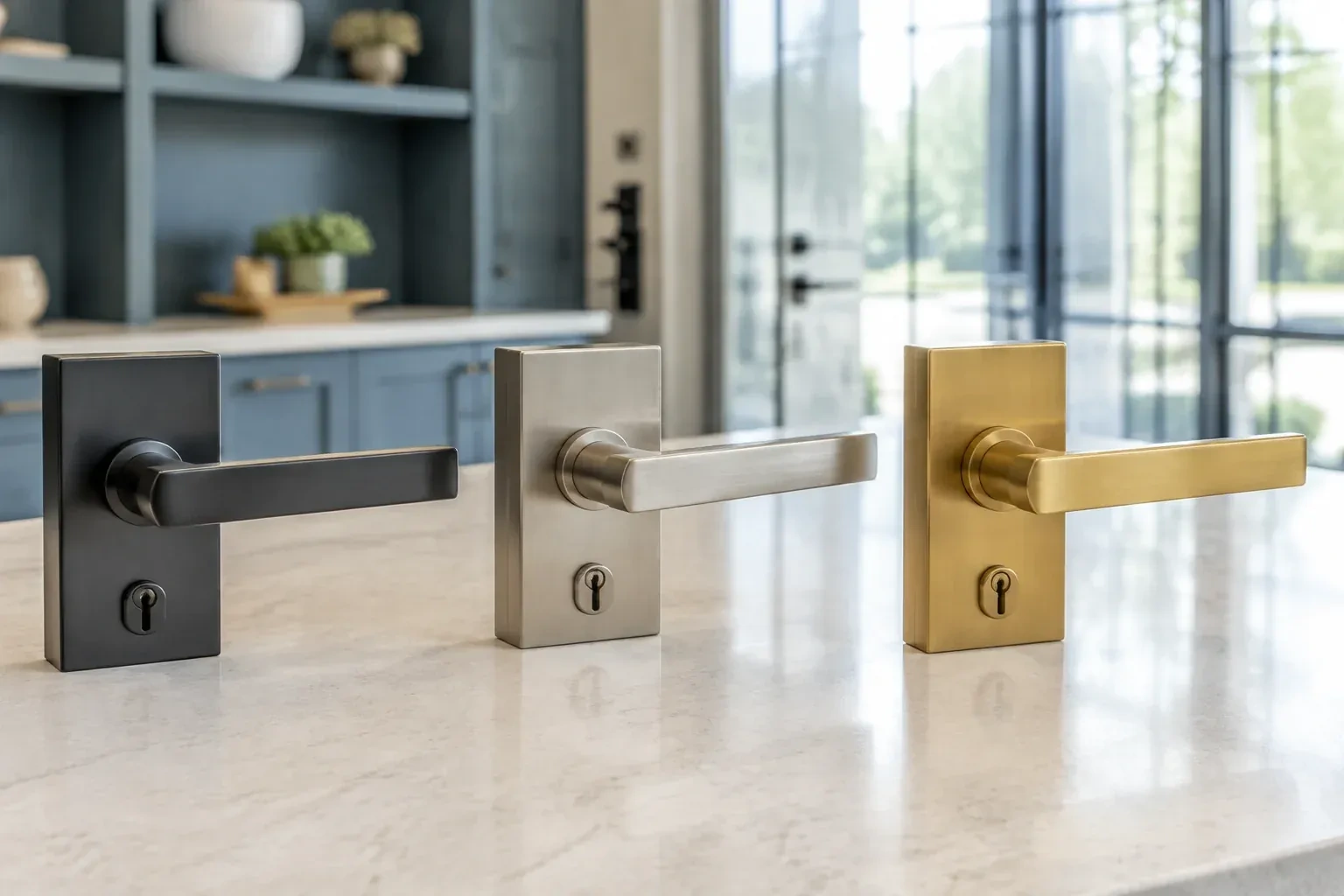
Yes, within what the door's rating allows. Exit devices and their trim come in a range of finishes to sit alongside other door hardware in the building, and outside trim in particular, being the visible part from a public side, can be chosen to match levers or pulls used elsewhere. A fire-rated opening narrows the finish choice somewhat, since the whole assembly has to stay within its listing.
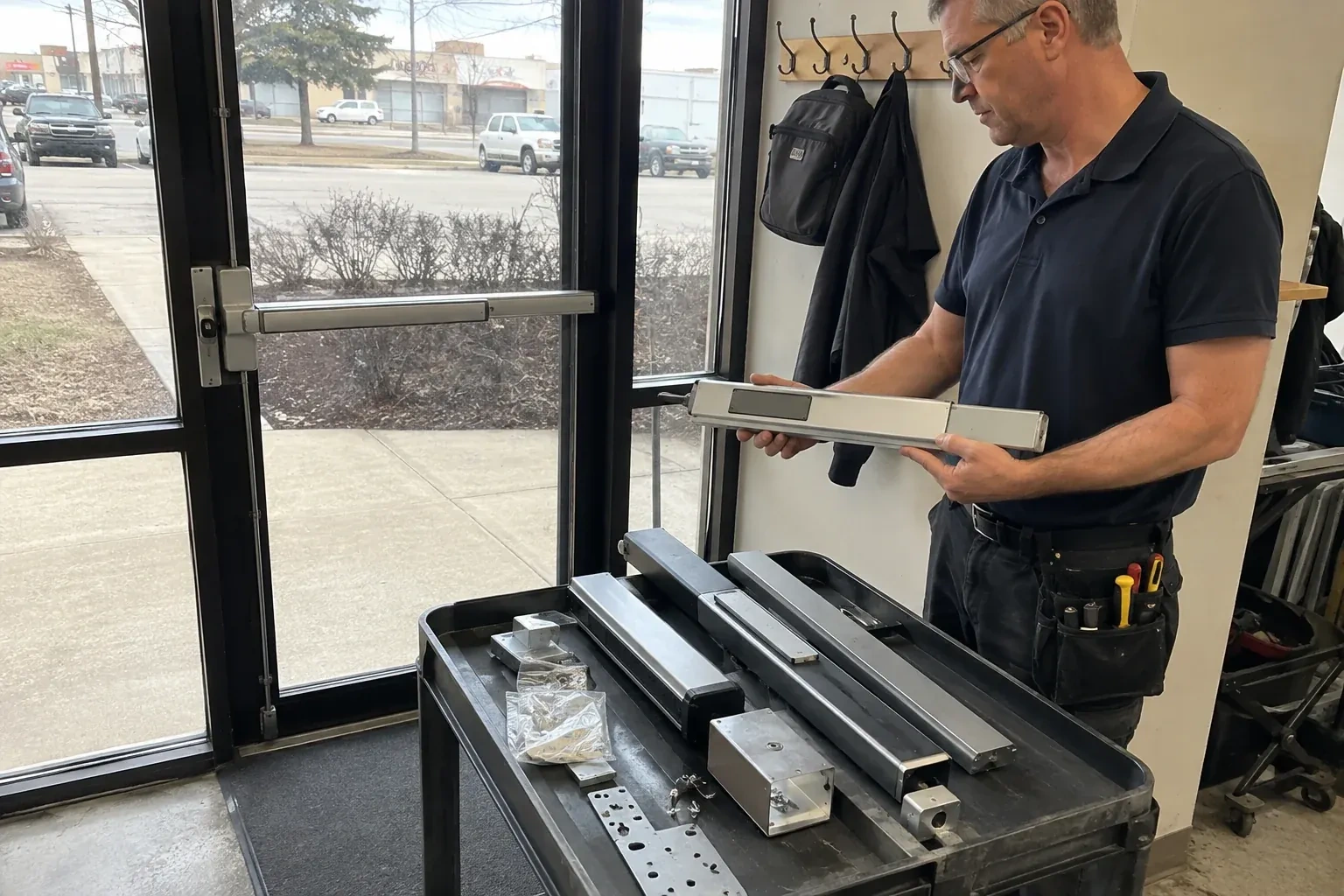
Panic hardware is a door-latching device, usually a crossbar or touchpad running most of the door's width, that releases the latch the moment someone pushes on it from the inside. It is built and tested so a light, even push anywhere along the bar opens the door, which is why it is chosen for doors serving rooms with enough people that fumbling for a key during an exit is not acceptable.
No additional fastening should stay on an exit door that does not release the same way the primary device does. A hasp, padlock or separate deadbolt added at some point for extra security is a common finding on an older door, and removing or replacing it with something that releases under the same push is part of bringing that opening back to a single, reliable exit.
NiagaraOntario
Panic & Exit Hardware · Beamsville, Vineland, Campden, Wellandport
Every square is one home in a hundred.
On-site assessment
A padlock went on the stockroom's back door years ago for security and nobody has thought about it since, until the walkthrough this week pointed out that the same door is the room's only other way…
(289) 432-1169, open 24/7.
On-site assessment preferred · (289) 432-1169, open 24/7