Sound familiar?Lincoln
- The call
- The padlock on the shed has been stiff all summer. Today the key twisted, cracked at the tip, and left the end buried deep in the keyway. The rest came out in your hand, and the padlock is still closed.
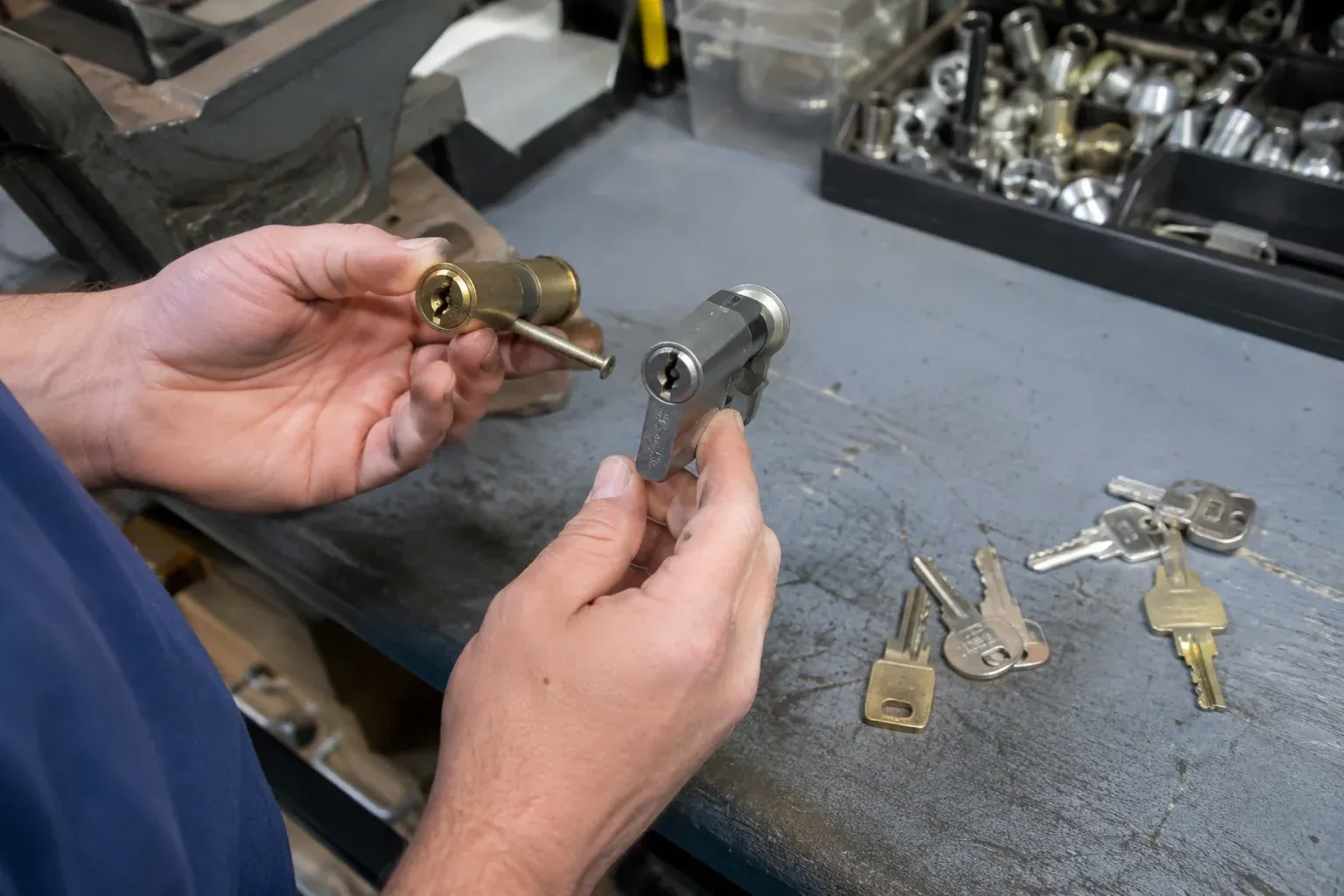
That key had been bending a little for years, and you kept straightening it. Today it finally cracked at the deepest cut.
Freezing is one of the bigger seasonal causes of broken keys here. Meltwater runs into the keyway during a thaw and freezes overnight, so the plug is locked in ice, and most people respond by turning harder. The blade gives before the ice does. A winter extraction visit therefore begins with thawing: lock de-icer or gentle warmth frees the plug, then the fragment is drawn out and the cylinder is dried and given the lubricant its maker specifies. You leave with the piece out, a new key cut, and a small tube of de-icer so the next frozen morning is a pause rather than a snap.
Sound familiar?Lincoln
Broken Key Extraction · Lincoln
Scene 1
A car adds a few questions. Did the key break in the door, the trunk or the ignition? Does the head in your hand hold a transponder chip or remote, and does the car start with the spare if there is one? Is the steering wheel locked, which can hold an ignition cylinder under tension and pin the fragment in place? Do the other doors open with the same key, or is the vehicle on a different key for the ignition and doors? These answers decide whether the job is a door extraction and a new blade, or an ignition extraction that needs the wheel freed and the wafers checked first.
Scene 2
Occasionally a piece is too deep, glued in, or wedged past the pins where no extractor can reach. On a serviceable, removable cylinder, the lock is serviced from behind: removed from the door or padlock (a rekeyable padlock is normally unlocked first), its cap or retaining clip taken off, and a plug follower used to push the plug out while the top pins and springs stay in place. With the plug in hand the fragment is tapped out from the rear, the pins inspected, and everything cleaned before reassembly. Where the cylinder is non-rekeyable, damaged or will not free this way, a replacement cylinder is the alternative, explained first.
Scene 3
If the lock belongs to a rental unit, a condo or a workplace, you get a plain account of what was done: the fragment removed, the cylinder inspected and serviced, any key cut, and whether a rekey or replacement was recommended. Tenants and landlords in this province each carry obligations when locks are changed and keys are shared, so if the cylinder was replaced or rekeyed, the note records who now holds which key. For a property manager it closes the ticket cleanly; for you it means the next conversation about that door starts from facts rather than memory.
What shapes the quoteBeamsville Locksmith Pros
FeesSame any hour
It is a well-known idea and a poor one. A drop of adhesive on the other half rarely bonds to a piece of brass sitting in a tight keyway, and what it does bond to is the cylinder, the pins and the face of the lock. That film then has to be dissolved before proper extractors can slide in. Keep the halves apart and dry.
Yes. Small cylinders in padlocks, mailboxes, desk drawers, filing cabinets and cam locks on lockers hold a fragment the same way a door does, and the same slim hooks and spirals fit them. Their keyways are narrower, so it is finer work. Where a padlock is not worth saving, the locksmith will say so and offer a cut-off and a new padlock keyed to your preference instead.
Usually. Laid end to end, the halves show the full set of cuts and identify the blank, and a locksmith reads them with a gauge and cuts a fresh key to those depths on a code machine. That is better than tracing the broken blade on a duplicator, because a worn key copied is a worn key repeated. If a spare or the key code exists, that is used instead.
NiagaraOntario
Broken Key Extraction · Beamsville, Vineland, Campden, Wellandport
Every square is one home in a hundred.
On-site assessment
That key had been bending a little for years, and you kept straightening it.
(289) 432-1169, open 24/7.
On-site assessment preferred · (289) 432-1169, open 24/7