Sound familiar?Campden
- The call
- The team has grown past the point where one shared key still makes sense. New hires need a way in before a manager arrives, and the current setup cannot tell one person's entry from another's.
Head office wants a record of who opens the branch and when, tied to an actual name rather than a shared code scrawled on a sticky note taped under the till.
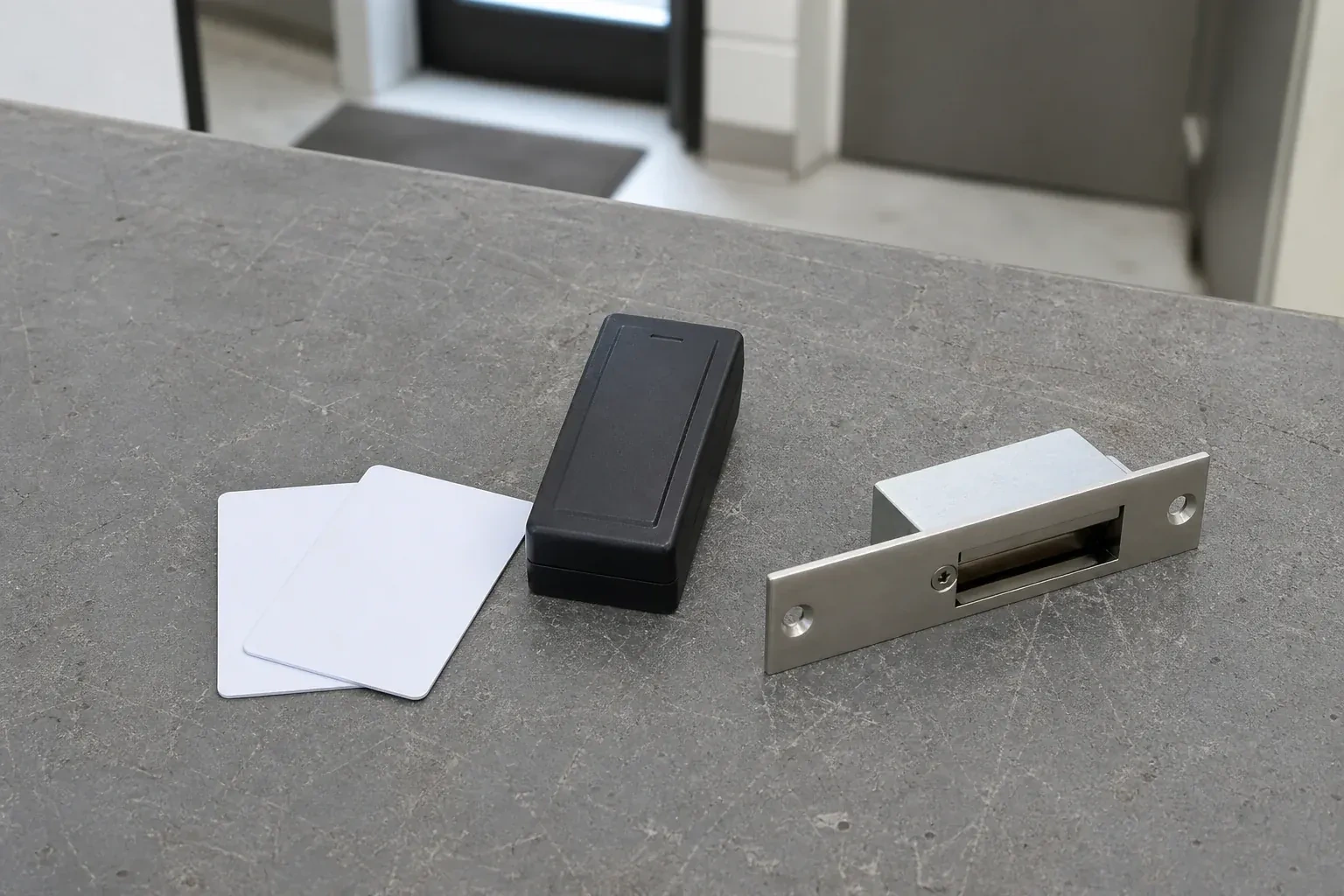
Credentials take several forms, and most installations end up mixing them: a proximity card or fob held near a reader, a keypad code typed at the door, or a mobile credential read from a phone. Cards and fobs are simple to hand out and just as simple to switch off if lost; a code needs no hardware to issue but has to be changed once shared too widely; a mobile credential ties entry to a device the person already carries. The mix is chosen door by door, based on who uses each one and how often.
Sound familiar?Campden
Access Control Installation · Campden
Scene 1
A networked controller usually needs a live network connection to report events and accept schedule changes, so where that option is on the table, the survey includes a look at the building's existing network: is there a switch port near where the controller will sit, does the building's technology policy allow another device on the network, and does a networked system suit the business better than several standalone readers that need no network at all. Answering this before ordering hardware avoids discovering, midway through the job, that the simpler standalone option was the better fit all along.
Scene 2
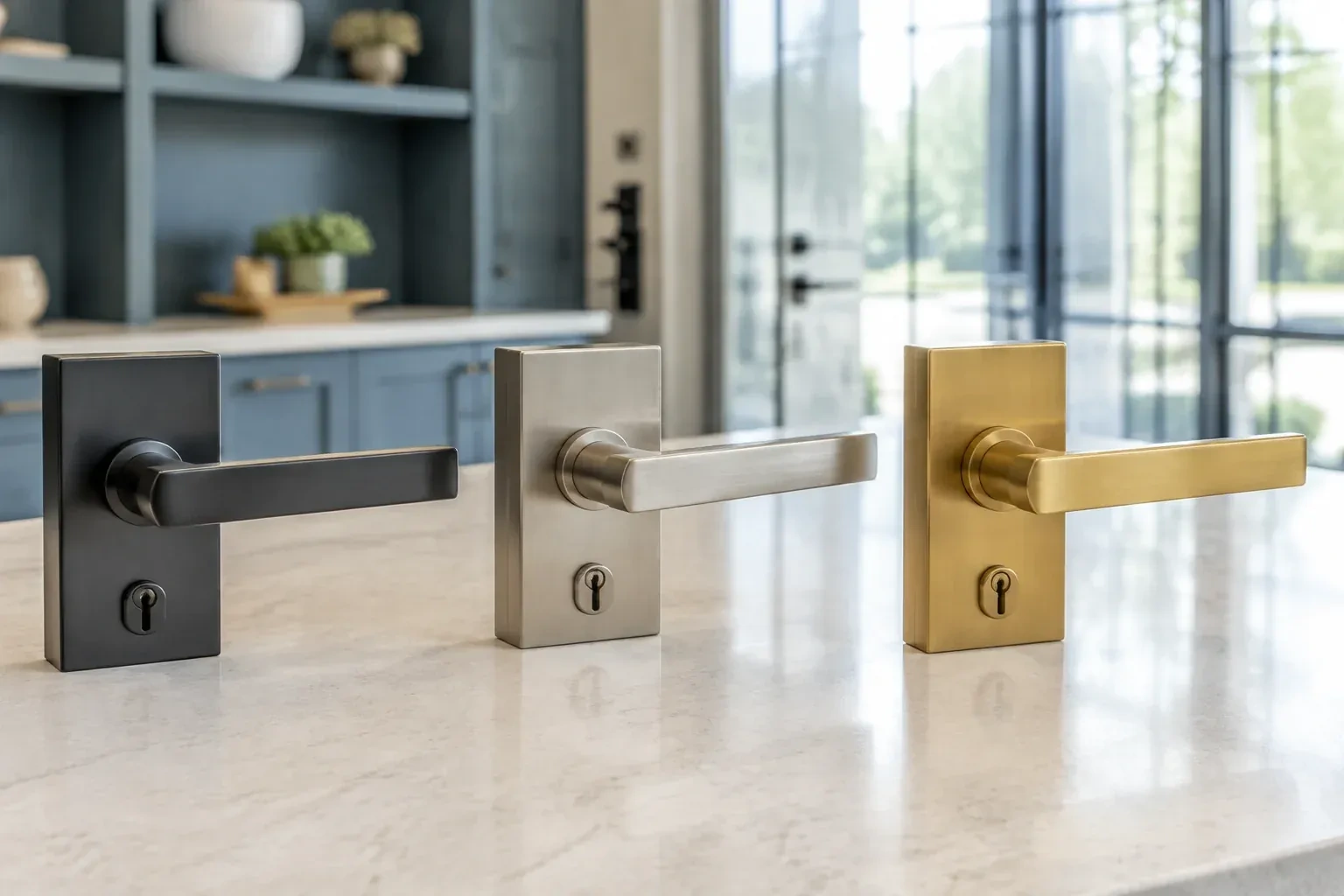
Where the selected hardware supports one, the locksmith fits a conventional cylinder alongside the electronic reader, cut to work with the rest of the building's keys rather than sitting apart as an odd one out; some access-controlled hardware is built without a key cylinder at all. On a door getting the override, the locksmith confirms it operates the latch or bolt cleanly with the electronic hardware in place, and notes who on staff will hold that key. On that door, a dead battery, a controller fault, or a power outage becomes an inconvenience rather than a locked business, since it still opens the ordinary way while the issue is sorted out.
Scene 3
From the day the installation is finished, adding or removing a credential is a task the business handles itself, usually in minutes: a new hire is enrolled before their first shift, and someone who has left the company is switched off as soon as it is reported, rather than waiting for a lock to be changed. The administrator account holds this control, and whatever support or maintenance access the installer keeps beyond that is set out at handover rather than assumed either way. Most businesses find this the biggest day-to-day change from a mechanical key: entry stops being tied to a physical object that has to be tracked down and collected.
What shapes the quoteBeamsville Locksmith Pros
FeesSame any hour
Yes. Access levels can be set to change automatically by time of day or day of the week, so a credential that opens a door during a shift can be denied outside it without anyone having to remember to switch it off manually. This is set up once in the schedule and then runs on its own from that point forward.
Yes, and this is one of the more useful parts of the system. A front office can unlock for regular business hours, a stockroom can allow only two credentials at any hour, and a loading dock can release only during a set delivery window. Schedules are set per door and per access level in the controller, and can be changed at any time without touching the hardware itself.
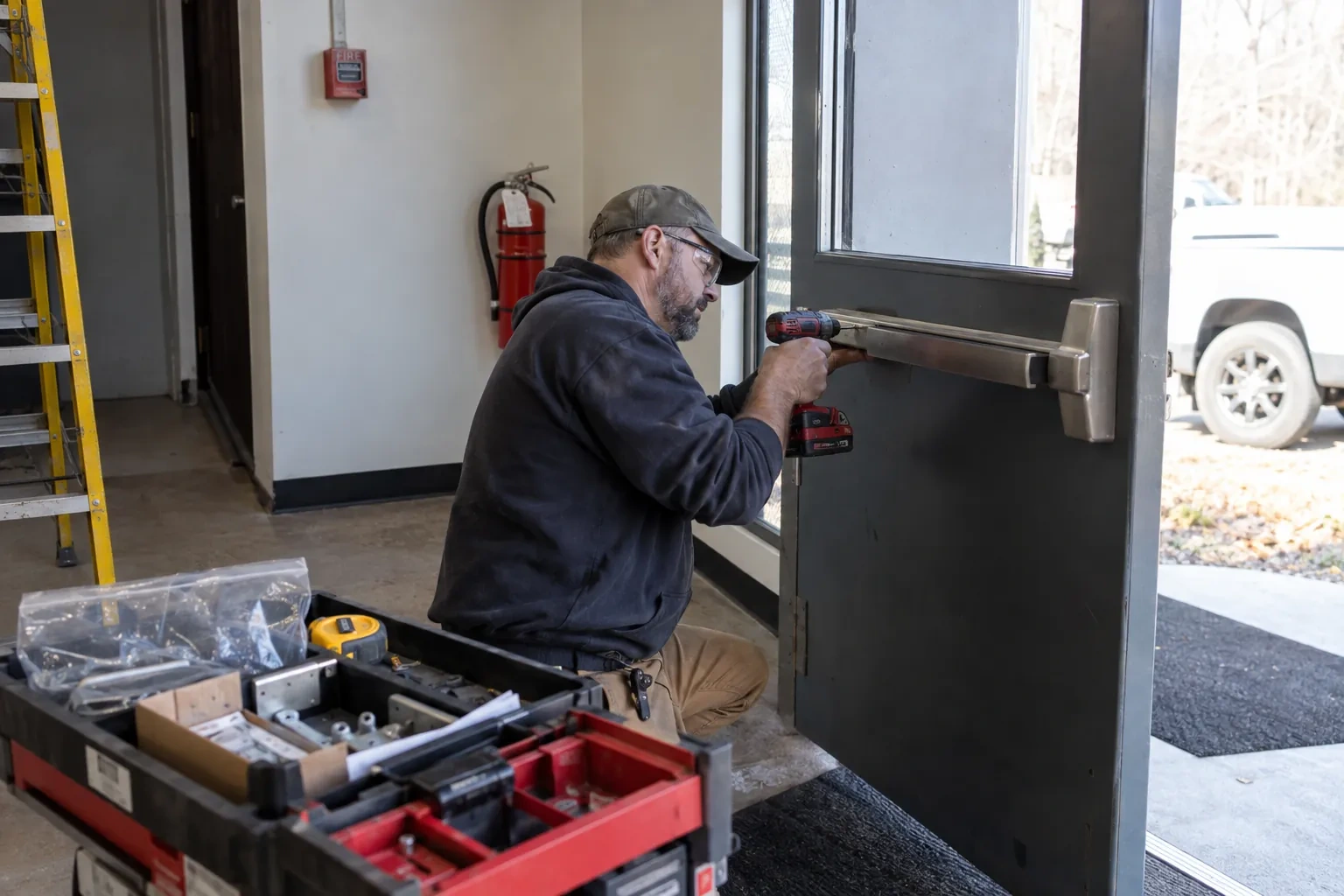
Ongoing maintenance is light: checking the battery backup and the request-to-exit device periodically, keeping reader surfaces reasonably clean, and revoking credentials promptly once someone leaves. Door and frame alignment is worth a look at each change of season, since a shifted door can affect how cleanly an electric strike or a magnetic lock releases.
NiagaraOntario
Access Control Installation · Lincoln, Beamsville, Vineland, Wellandport
Every square is one home in a hundred.
On-site assessment
Head office wants a record of who opens the branch and when, tied to an actual name rather than a shared code scrawled on a sticky note taped under the till.
(289) 432-1169, open 24/7.
On-site assessment preferred · (289) 432-1169, open 24/7