Beamsville Locksmith ProsBulletin 2 of 3Lincoln, Ontario
Commercial-Grade Lock Replacement: step by step
A great deal of what happens during this service is choosing the right category of hardware before a single screw comes out.
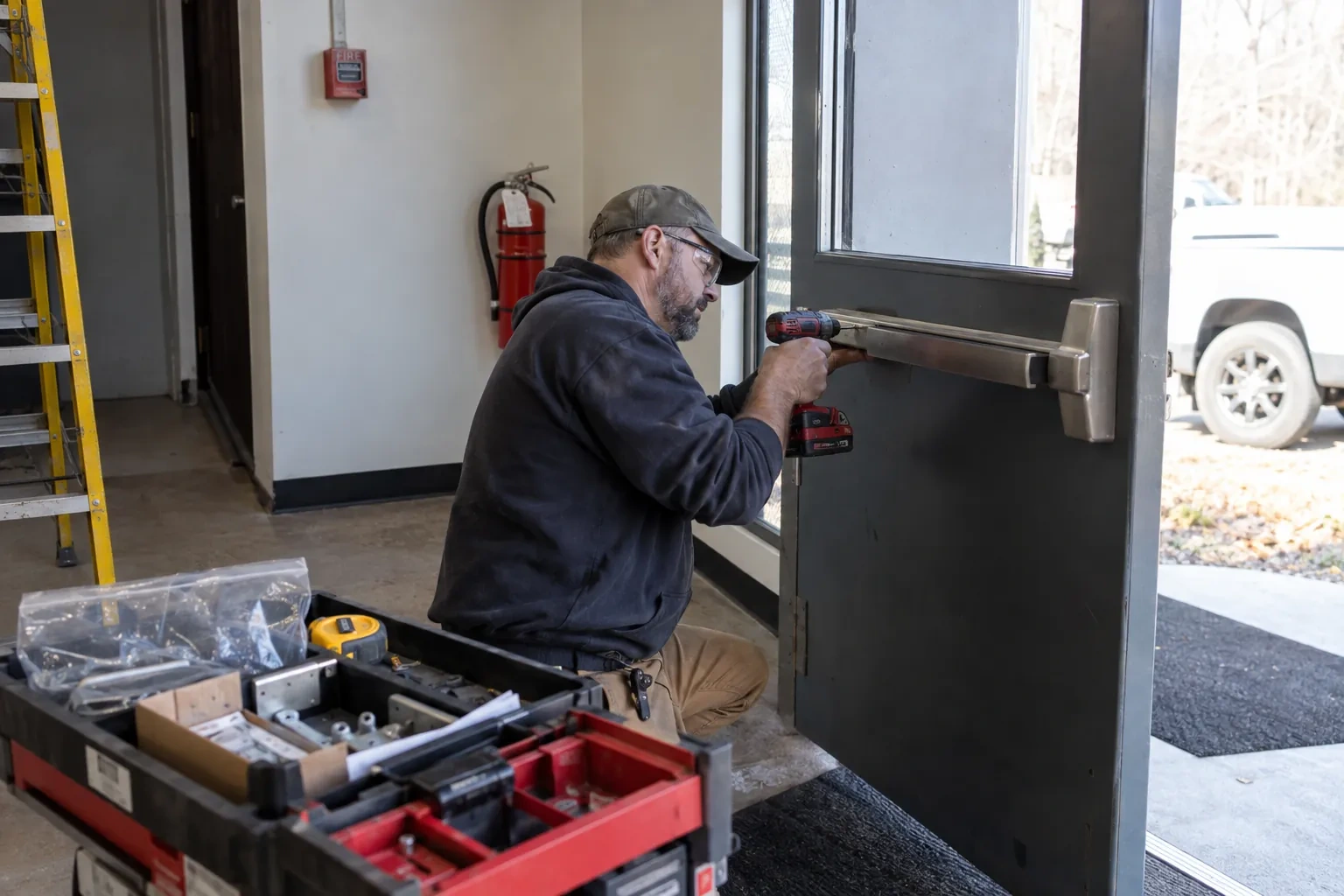
A great deal of what happens during this service is choosing the right category of hardware before a single screw comes out. Storefront glass and aluminum doors call for a narrow-stile lock or a hookbolt rather than the mortise body a solid wood or hollow-metal door would take, and a door serving a busy exit route may need listed exit hardware regardless of what was on it before. The locksmith identifies which category the opening belongs to, sources hardware built for it, installs it to the door's existing preparation, and confirms the finished lock operates correctly from both the public and the staff side.
Weighing what the new hardware needs to do long term
The last part of the assessment looks past today's problem to how the business expects to manage this door going forward: does staff turnover happen often enough that an interchangeable core, which lets a key holder change the combination without pulling the whole cylinder, would pay for itself in convenience? Does the business want a restricted keyway so blanks cannot be cut at an ordinary hardware counter? These questions shape the specific hardware ordered as much as the door's physical construction does.
Removing the old hardware cleanly
The existing lock, cylinder and strike come out without enlarging the door's mortise pocket or bore, since a clean prep is what lets the new hardware seat correctly. Any hardware that was previously mismatched to the door, an incorrect backset or a strike screwed in at an angle, is noted so the business understands why the last repair may not have held. The old hardware is set aside for the business to keep, dispose of, or use as a reference for other doors still running the same outdated lockset.
Fire and exit requirements satisfied, not just noted
Where the door forms part of a fire separation or a required exit route, the new hardware is listed for that use and the door has been tested to confirm it still closes and latches on its own. Any push-type release hardware installed to meet an occupant-load threshold has been checked across the whole route it serves, not just at the one door where the call started. The business leaves with an opening that satisfies the condition that triggered the work, rather than a lock that merely looks similar to what was there before.